


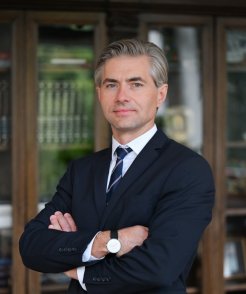
BALTIC SEA STATES SUB-REGIONAL CO-OPERATION 10TH CONFERENCE STATEMENT BY MR. JUSTAS VINCAS PALECKIS VICE-MINISTER OF FOREIGN AFFAIRS OF THE REPUBLIC OF LITHUANIA (Lillehammer 24-26 October, 2002)
Dear Mr. Chairman,
ladies and gentlemen,
At the beginning of my intervention, I would like to congratulate the hosts of this Conference from the Olympic city of Lillehammer, Eastern Norway County Network and Mr. Brunon Synak, the Chairman of the Baltic Sea States Sub-regional Co-operation, and his colleagues from the organization with the convening of the 10th Conference of the Baltic Sea States Sub-regional Co-operation. Baltic Sea region is fated historically to different forms of an interregional and international co-operation. Ten years of an intense co-operation among the CBSS member states created a common identity for the region, which could serve as a model for many turbulent areas in Europe and in another parts of the World. The Baltic Sea region is the place where the West meets the East but the definitions are changing and are belonging rather to the sphere of geography. In few years, after the EU enlargement will take place this region will change completely and for a younger generation present in this hall it will become a common region and a part of the united Europe.Lithuania was in the centre of events in Europe for the past decade. This decade changed significantly the East of the continent. The things, which were unbelievable ten years ago, have become a reality of today. The decisions would be taken in Copenhagen and Prague at the end of this year hopefully will enable us to join the EU and NATO. Achievement of these two priorities of the Lithuanian foreign policy of a paramount importance will provide for us an opportunity to concentrate even more on the third pillar of the Lithuanian foreign policy – development of good neighbourly relations and co-operation in the region. Due to the knowledge of the languages and what is even more important a mentality of the West and the East, Lithuania could take a role of interpreter between two approaching parts of the Europe. This is a fate of all new members of the EU especially those of the North. Even here in Lillehammer, I had an opportunity to discuss a practical implementation of this idea with a Swedish colleague. Why not to suppose that twinned cities from Lithuania and Sweden, Norway, Finland or Denmark could find a third companion among Russian cities and this co-operation could provide a synthesis of experience, knowledge and good will to support each other. Not only has the sphere of economy, but also mentality of the nations inhabiting the east of the continent changed significantly. This is not a surprise that attitude of Lithuanians towards nations of the North, Germany and other Baltic States is very positive, exceeding 60 per cent and has not changed for long years. The last decade of the history of the independent Lithuania have been marked by a strong co-operation and support provided by the Nordic countries. They were the first to support and recognize the Lithuanian independence. There is no surprise that in the downtown of Vilnius you could find the street of Iceland and the street of Oslo. There are also other changes in mentality. The strong support of the countries from the Baltic Sea region for the establishment of the modern Lithuanian state, unification of Europe, overcoming prejudices of the past have influenced changes in relations with the immediate neighborhood. Large scale of co-operation in the region including cross-border and local level activities consolidated positive opinion in the Lithuanian society towards Poles and this has reached heights of more than 50 percent. The standpoint towards Russia and Belarus is changing rapidly and those nations are also precept as important partners for co-operation.Talking about a contemporary situation, trade of Lithuania with its neighbors in the region increased significantly. Being in a unique position between the East and the West, Lithuania has more than 50 % of the general trade turnover with the EU countries, but at the same time it has maintained intense economic relations with Russia. Imports from this country are still exceeding 21 per cent, but those numbers are closely followed by the imports from Germany with 17 per cent. Exports from Lithuania are even more diversified. The first three places in the list belong to the United Kingdom, Russia and Germany. Investments from the Nordic countries have reached 1 billion 481 thousand euro and take up 42 percent from the total number of the direct investments into the Lithuanian economy. Different projects in many areas have been and are still implemented with the strong technical assistance provided by the Nordic States. Sectors of a social security, environment protection, agriculture, energy, education, culture and education have been significantly improved with the assistance of our Western neighbors. We should enlist not only a bilateral assistance but also a significant impact to the mutual understanding provided by the programmes and projects of the Nordic Council of Ministers. These activities facilitated the better knowledge of the Nordic languages and Nordic literature in Lithuania and, I am sure, in Latvia and Estonia as well. For example, Lithuanian Chamber of industry, commerce and crafts in co-operation with the Chamber of commerce of the Eastern Sweden prepared a qualitatively new programme of the EU Baltic Sea Partenariat. The main objective of this programme was to prepare small and medium enterprises from the candidate countries in the Baltic Sea region to be competitive in the enlarged European Union. The enterprises from all three Baltic States have participated in the Partenariat. More than 200.000 euro for the implementation of this big programme has been provided not only by Sweden but also by Germany as well and was also funded by the relevant programmes of the PHARE CBC and of the Lithuanian Government. Many of not so expensive projects could be added to the list and I could mention few of them representing different spheres of interest. The information system to small and medium enterprises of the Baltic Sea region has been created with the assistance provided by the Karlskrona municipality from Sweden. This joint info system launched and provided entry to 150 home pages around the region and ensured intense training of the SME in the use of the information technologies. The Swedish partners assisted to design and develop the Recreational Park in the Lithuanian town of Domeikava. The Danish Odense municipality assisted to improve the refugee integration system in the city of Kaunas. Lithuanian border guards together with the Finnish counterparts are participating together in twinning projects for the Border Police. Other twinning projects are tackling such serious issues as money laundering prevention and assets tracing in the Baltic Sea region. The Norwegian Government provided assets sufficient enough to fuel activities in the Country of Lakes euroregion embracing municipalities in Lithuania, Latvia and Belarus.A strong interaction between cross-border regions within the Nordic countries under auspices of the Nordic Council of Ministers is a source of inspiration for other regions around the Baltic Sea. This experience could be transferred to the eastern part of the Baltic Sea region and, taking into account widely spread and well functioning network of the BSSSC, there is a space for this organisation to pay more attention to the organisational needs of euroregions.In addition to that, I could mention that we would support strongly the elaboration of a project on regional cross-border co-operation in adjacent areas started by the Nordic Council of Ministers together with the Lithuanian relevant institutions. The project will cover cross-border activities, mainly in the form of euroregions, in the three Baltic States and in the Northwest Russia. Applying experience of the Nordic co-operation in this area, activities of the project will target about 10 existing euroregions in the adjacent areas. Main objectives achieved by this project could be a strengthening of the cross-border co-operation in the adjacent areas and a creation of a network of the cross-border regions in the eastern part of the Baltic Sea region. As it is initially estimated, new network could be linked with a CBC network already existing in the Nordic countries. Establishment of an active partnership between local authorities in the Nordic countries and Lithuanian districts and municipalities could enhance capacities of the Lithuanian local authority’s preparation for absorption of the EU funds for a regional co-operation after the EU enlargement. Problems of local authorities with a view to the approaching membership of Lithuania in the European Union were discussed on several occasions. The main gaps in a preparation for the future membership have been identified: lack of experience of an international co-operation, not sufficient funding for the prepared projects and low level of the personnel dealing with the preparation of projects. Simple look at a situation in cross-border activities of the Lithuanian local administration confirms that only few districts and municipalities are covering a biggest share of the cross- border activities. Evidence is at this conference and I should notice with a pleasure and regret at the same time, that only two counties of Lithuania, namely Klaipėda and Kaunas, are participating successfully in the Baltic Sea States Sub-regional Co-operation. Kaunas provided very concrete input into the activities of the BSSSC by organising the 7th Conference of the organisation. For others, there is a lack of administration capabilities and not a sufficient funding to participate actively in all forms of international co-operation. Nevertheless, positive trends are prevailing. The example of the last two years of the PHARE Small Project Fund for cross-border co-operation shows clearly that the geography of projects presented by municipalities is expanding. Such a small municipalities as Skuodas and Kalvarija in the bordering areas are overcoming negligible standpoint towards the border regions in the past and are presenting projects for common activities in the Bartuva River and Vištytis lake regions together with the Latvian, Polish and Russian counterparts.The Government of Lithuania and other relevant central institutions of our state are supporting such kind of activities. The experience gained by local authorities in an international co-operation could be of a particular value ensuring balanced development of the regions of Lithuania and could provide a strong impact in the formation of a good neighbourhood around Lithuania. This could also provide a necessary experience for a successful absorption of the EU funds for the regional development. Talking about the cross-border activities in Lithuania and especially taking into consideration the EU enlargement in a very close future, it is difficult to avoid mentioning co-operation with the Kaliningrad oblast of Russia. After the restoration of the independence of Lithuania, we have paid special attention to the Kaliningrad oblast because of its unique geographic situation and special historical links between Lithuania and this region. Since the very beginning, the Russian Federation has responded very positively to the Lithuanian efforts towards this region in the immediate neighbourhood. Administrative capacities, environment issues and contacts between NGOs are the areas where we have achieved a significant success. We are proud that this dialogue had a very practical outcome well known as the Nida Initiatives. Together with our Russian partners, we have managed to establish a permanent Parliamentary Assembly consisting of the members of the Lithuanian Parliament Seimas and from the Duma of the Kaliningrad oblast of the Russian Federation. The Lithuanian experience in a co-operation with the Kaliningrad region of the Russian Federation combined with the Polish one provided a significant input for the elaboration of the EU strategy towards this region. The integration process in the Baltic Sea region has an inestimable importance when we are talking about people - to - people contacts and accessibility of the inhabitants of this Russian enclave to Russia and to the surrounding neighbouring countries, future members of the EU. Lithuania presented its position on the transit issue by closing negotiation chapter with the EU on justice and home affairs. At the same time, we are in favour for looking facilities within the Schengen aquis system. The visa issue is not an obstacle but rather a testing ground for good relations in the region. A flexible system of visas and facilitated travel documents could provide many opportunities how to secure future borders of the EU and provide an easy access of Russian citizens to and from the Kaliningrad region. Mr. Chairman, The enlargement of the European Union will become a reality in 2004. This situation will provide new opportunities for the Baltic Sea region. Instead of the East – West relations around the Baltic Sea, we will have a very consistent dialogue between the enlarged European Union, expanded European Economic Area and the Russian Federation, a significant partner to the both organizations. Many activities are taking place recently and are focused on the issues how to make EU enlargement beneficial for all Europe. This also could be applied to our region in particular. Few days ago, I took part in the Ministerial Conference on the Northern Dimension in Luxembourg. I know that the BSSSC is also very interested in the development of this initiative of the European Union. The discussions on the Guidelines for the new Northern Dimension Action Plan were very fruitful and interesting. Differences of opinions just confirm that all the participants, including EU members and partner countries, are taking this endeavour very seriously. Our strong feeling is that the successful implementation of the Northern Dimension Action Plan will be based on an intense co-operation with the organisations in the region, including the CBSS and Baltic Sea States Sub-regional co-operation. We raised the point in Luxembourg, that the Kaliningrad issues should be adequately reflected in the new Action Plan and Kaliningrad region of Russia should be seen in the context of the development in the Northern Dimension area.Taking into consideration that this is the first decade of serious regional activities in the Baltic Sea region, a widespread cross-border co-operation is relatively new to a number of states, especially in the Eastern part of the Baltic Sea region. At the same time, this is exactly what we need for a wider dialogue and interaction of our communities, as well as for a smoother development in the changing Europe.Ladies and gentlemen,Empires were raised and have disappeared in this part of Europe. They tried to unite this region by a force but the force has its own limits. Now we have a united Baltic Sea region, which is united by a good will, common interest and deep understanding of a common future. Indeed, we are facing many dangers and threats. The tragic events in the USA in the last year and recent events in Moscow are a reflection of tensions and instability in the different parts of the world. However, many young people even do not know what the real international tension means and what does it mean to live under the permanent threat that the cold war could become a very hot nuclear inferno for the whole world in any minute. And this is good to live without this knowledge because our common future on the shores of the Baltic Sea could be built not on a fear but on a friendship, solidarity and co-operation. This part of Europe could and should grow up together and benefits of this development should be beneficial for all inhabitants of the Baltic Sea region.Thank you Mr. Chairman.
Social media


