


Lithuania’s Foreign Vice-Minister discusses perpetuation of memory of Dutch Honorary Consul Jan Zwartendijk
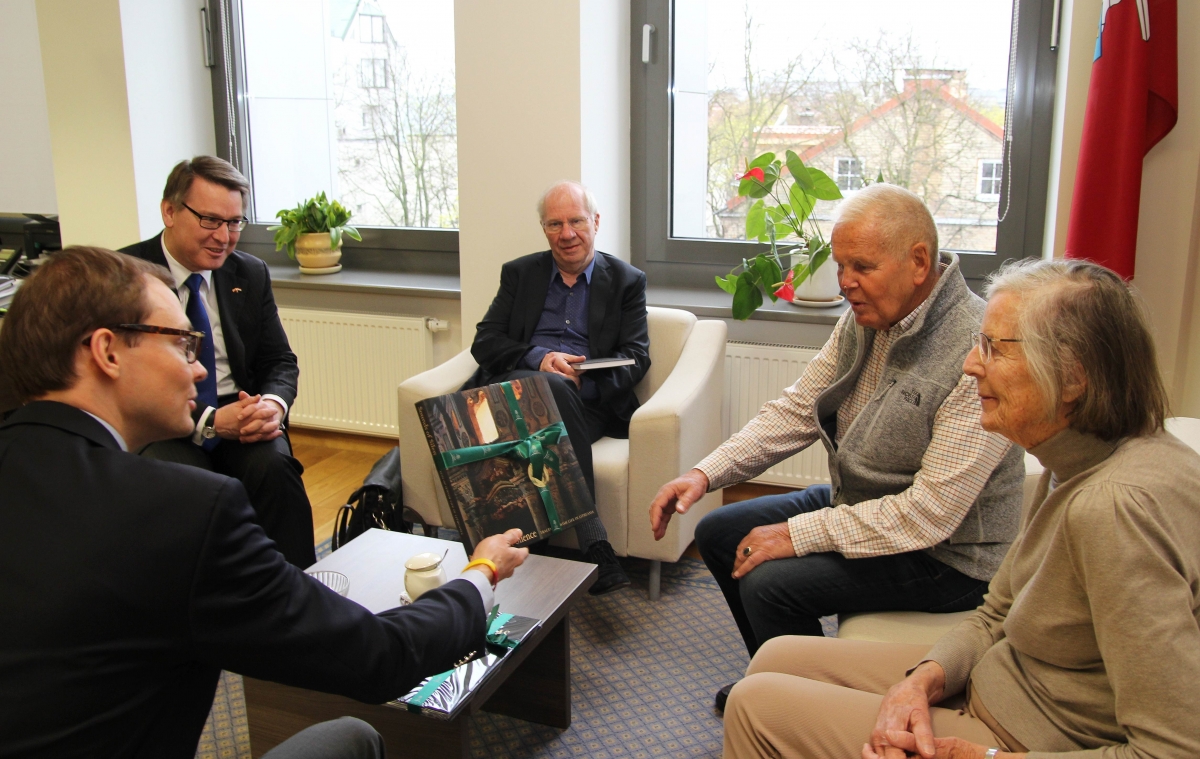
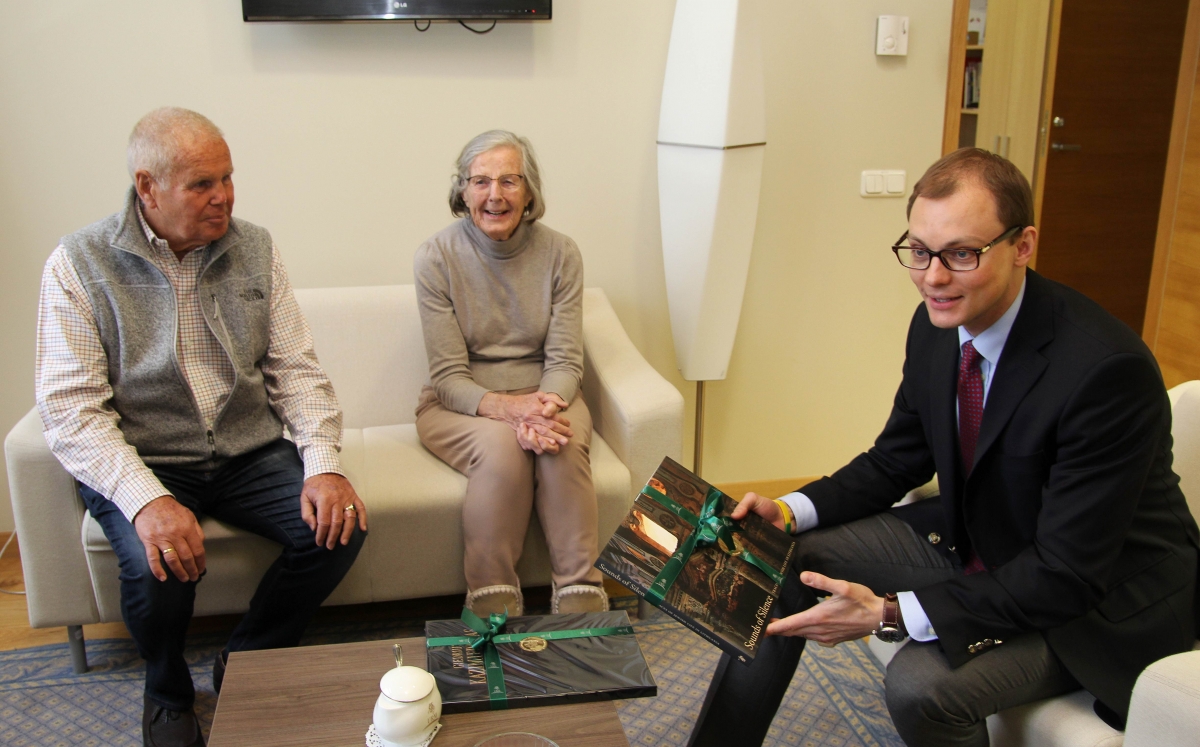
On 26 April in Vilnius, the Vice-Minister of Foreign Affairs of Lithuania Mantvydas Bekešius met with children of Jan Zwartendijk (1896–1976) who served as the Dutch Honorary Consul in Kaunas, Lithuania, in 1940 – Robert (born 1940 in Kaunas) and Edith (born in 1927) – and the famous Dutch writer Jan Brokken. The meeting was also attended by the Ambassador of the Netherlands in Lithuania Bert van der Lingen.
Bekešius and the guests discussed the perpetuation of the memory of the Dutch Honorary Consul Jan Zwartendijk in Lithuania, the erection of a monument in Kaunas and called for giving broader presentations of Zwartendijk’s heroic deed around the world. The Honorary Consul’s daughter told Lithuania’s Foreign Vice-Minister about her life in Lithuania, her gloomy experiences of the beginning of the Soviet annexation of the country and circumstances around the issuance of visas.
The Dutch Ambassador L. P. J. de Decker, who resided in Riga, appointed the representative of Philips Electric in Kaunas Zwartendijk as the Dutch Honorary Consul in May 1940, just after the Dutch capitulation.
As the Soviet Union occupied Lithuania in June, the Jewish refugees who had fled to Lithuania from German-occupied or Russian-occupied territories felt impending danger and were looking for ways to escape from the country. Shortly, Zwartendijk began to issue the “Curaçao visas”. He would write in their passports that they were travelling to Curaçao, a Netherlands overseas territory. This offered Chiune Sugihara a “legal” cover for issuing transit visas for traveling through Japan to this destination. The visas helped save thousands of lives.
In early August 1940, the Soviet government closed foreign representations in Lithuania and Zwartendijk returned to the Netherlands with his wife and two children.
Brokken is the author of “Baltic Souls” (Baltische Zielen), a best-selling book in the Netherlands about the history of the Baltic countries. He is now gathering material for Zwartendijk’s biography that will be published next year.
Lithuania’s Foreign Vice-Minister took interest in the process of writing the book, supported the idea to simultaneously publish it in several languages and assured that the Lithuanian archives would help to collect the material.
Social media


